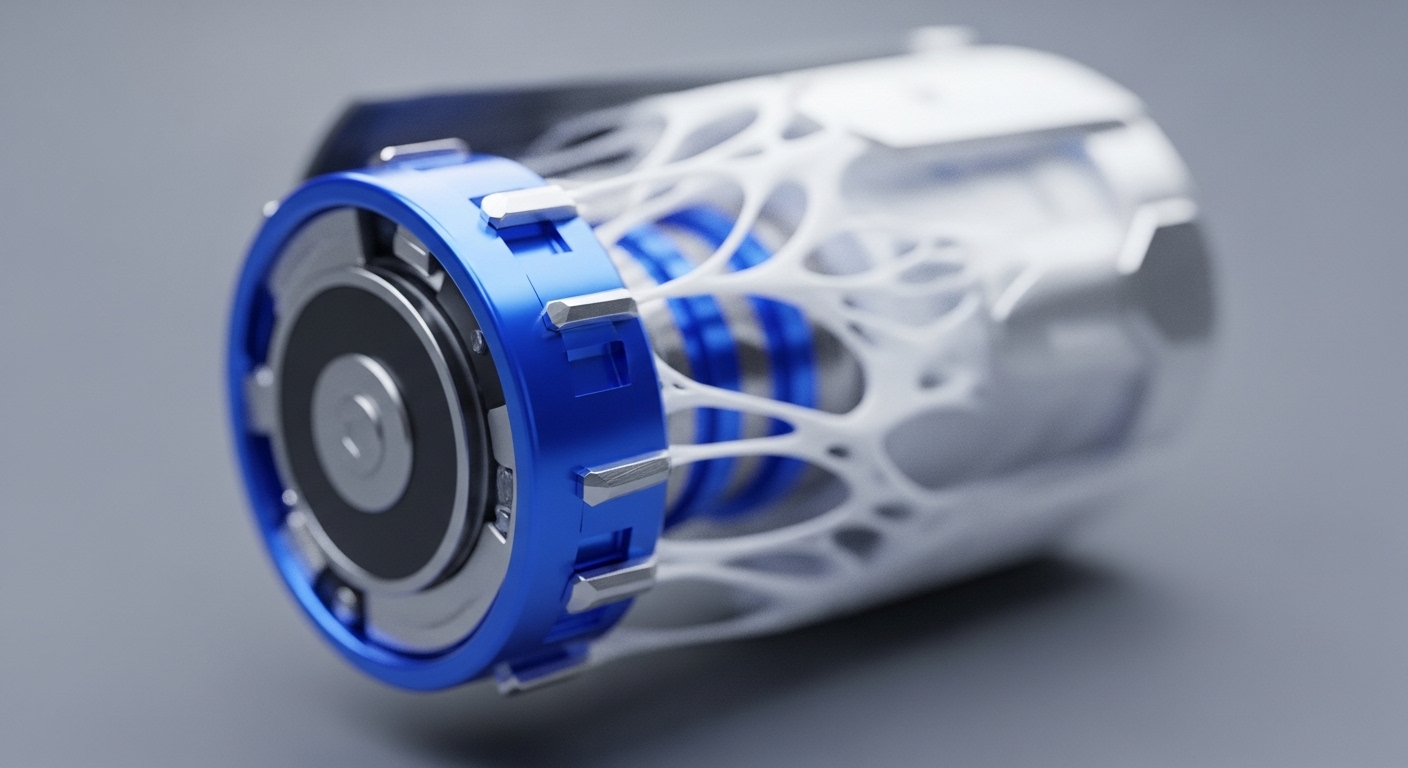
Sublinear Memory ZKP Provers Enable Widespread Verifiable Computation
A novel streaming prover reduces ZKP memory from linear to sublinear, democratizing verifiable computation for resource-constrained devices and large-scale applications.
Secure VFL with Blockchain and Feature Sharing Proof
A novel decentralized framework combines blockchain and replicated secret sharing, enabling privacy-preserving vertical federated learning with verifiable feature sharing.
Aggregating Node Preferences Enhances Byzantine Fault Tolerance in Blockchain Consensus
A novel PBFT algorithm allows nodes to express preferences, integrating incentive mechanisms and verifiable randomness to achieve robust multi-value consensus.
Léonne: Topological Consensus Networks Resolve Blockchain Trilemma with Quantum Security
Léonne introduces a novel Proof-of-Consensus using topological networks and quantum dynamics, enabling scalable, secure, and decentralized blockchains.
Encrypted Mempools Alone Cannot Solve Maximal Extractable Value
Cryptographically concealing transaction data until execution faces fundamental economic and technical limits, preventing universal MEV mitigation.
Language Design Impacts Smart Contract Formal Verification Efficacy
This research comparatively analyzes formal verification in Solidity and Move, revealing how inherent language design choices fundamentally dictate verifiability and security outcomes.
Formalizing MEV with Abstract Blockchain Models for Robust Security Analysis
A formal MEV theory, built on abstract blockchain models, enables rigorous security proofs, fortifying decentralized systems against economic exploitation.
Proposer-Builder Separation Mitigates MEV Centralization
A novel mechanism, Proposer-Builder Separation, disentangles block construction from proposal, enhancing blockchain decentralization and censorship resistance.
Post-Quantum Dynamic K-Times Anonymous Authentication Enhances Privacy and Management
Pioneering lattice-based dynamic k-TAA enables adaptable, post-quantum anonymous authentication, critical for future privacy-preserving systems.